Branding at a Crossroads
Today, a brand must appeal to the psyche of customers to make a connection. For example: many senior travelers want hospitality and service above all. The core seniors market does not typically care for technology. They don’t like answering machines, PCs and automation. Younger travelers, in contrast, like casual and tech-friendly hotels with convenience, where food and drinks is a priority. They prefer to stay in hotels that have the look, feel, and comfort of their own homes.
Targeting a market niche start at the design stage.
Starwoods created the ‘Aloft’ brand for the young entrepreneur market and designed its hotels to include a bar, a food and beverage center offering fresh bagels, fruits and drinks, an outdoor area serving light meals, a fitness center with swimming pool, wireless Internet access property-wide, and flexible meeting and function space. Guest rooms have 9-foot ceilings and oversized windows, a signature bed, a work space with an MP3 docking station, and a flat-panel TV. Bathrooms are furnished with Bliss amenities and walk-in oversized showers. Starwood plans call for 500 Aloft to be open by 2012 (average daily rate: $100 to $125).
Brands for Small Island Hotels
Small hotels often don't have the opportunity to rebuild for a market. Nevertheless, the market for differentiation is strong and the small hotel is often sought out, particularly in Europe, where chain brand penetration is low (i). Small hotels can tap into the booming market for Boutique hotels, where uniqueness and character are preferred over big brand names. Differentiation and personality are the key.
Building a strong brand requires use of all appropriate channels, but too much reliance on the OTA channels can be have very negative side effects. Choice hotels discovered it had created a monster by building up its business with Expedia. In re-negotiating its contract with Choice, Expedia suggested that its brand was more important and that Choice just had no option but to abide by its rules and demands. The widely known secret is that OTAs don’t want all the hotels in the world, so many are going to get left out. Its wise to be direct!
Brand Integrity in the OTA Channel
We have seen chain hotels make great progress in building their own brand marketing and direct business, reducing their dependence on the OTAs, like Expedia. (81% of bookings to major chains are now direct). The Chains understand that reliance on OTAs is not good for Brand integrity.
Brand Integrity is a measure of the cohesiveness of the brand message and your ownership of it. This integrity is influenced by your message and how you present it, the medium/channels you use, what you promise and what is expected.
Your brand is your differentiation & your personality. How you market will influence your relationship with guests, their loyalty and your ownership of both the brand and the business.
See more on The Medium and the Message.
First be clear and then be seen
Branding requires being clear about your market and your USP and putting this across in words and pictures, with the right emotion and the right process in the right place. Next, get the message out with an appropriate call to action on all advertising, Search Engine Optimisation (SEO) and with appropriate exposure on the right marketing channels.
Shoppers need a reason to remember you and to return to complete their shopping experience. Create stickiness and be in true shopping channels, like Barbados.org, BarbadosVacationSpecials.com and BarbadosHolidayThemes.com, where shoppers can add you to their shopping lists and compare options. Shoppers must be able to visit your website and take action on interest; get a quote, save it or buy at any point.
The AXSES Travel Shopping Network is unique in its ability to provide easy access to your website at many strategic decision points. AXSES also provide many POS opportunities with bookable-maps, bookable-ads, bookable-banners, bookable-lists, etc. (click here for details). In fact, the entire AXSES network is bookable, every advertisement, listing and link is or will be driven by arcRes Tourism Bookings & Reservations System.
Branding with fair pricing and revenue management
A recent Cornell University study shows that travelers are confused by hotel pricing and often see it as unfair. This is not good for your brand! Many hotels now offer travelers a choice of rate plans and full disclosure. Many chains offer best rate guarantees.
We recommend that you manage rates and expectation with loyalty programs and special group pricing. Travel shoppers want to act (get a quote, save it, add it to a list, buy it) when they are ready, and they want to know they are getting a fair price.
AXSES is now introducing a new collaborative marketing solution, where we help tourism suppliers use technology to brand and market their products, get exposed and close more direct sales!!
For more information on how you can build and sustain your brand - please contact iclayton 'at' axses.net
More about AXSES: see
http://axses-travel.com | arcRes Marketing
i. The brand penetration index that measures the percentage of hotel rooms that belongs to a flag out of the total capacity, is over 70% in the US, while France is the market with the highest brand penetration index in Europe, with less than 30%.
Showing posts with label bookings system. Show all posts
Showing posts with label bookings system. Show all posts
Friday, 22 January 2010


Wednesday, 13 May 2009
SocialMedia4TravelMarketing
How to market travel on social media
Who is using which social media - how is the traveler using social media, which social media site is best for travel marketing.
This blog/web page offers a simple explanation with easy to understand detail. Social media clients have been analyzed in depth. Patricia Brusha of hospitality.net talks about 5 types of social media users - what they like and what social sites they might frequent - she adds marketing implications and lots of good advice for the travel marketer.
The blog/page summaries this dialogue with a simple table chart. In addition it offers a table of the leading social media channels for travel - with a layman's explanation of what they are and how they can apply. The page is full of examples and links to useful tool and resources for hotels, tourism operators and destination marketers.
The page is a social media resource of AXSES.
AXSES is a travel marketing and applications developer; building tools for travel suppliers (hotels and tourism operators) to market and manage their travel business. AXSES recently launched a Bookings engine and tourism marketing & e-commerce application for Facebook.
Thursday, 7 May 2009
Travel Marketing
Travel Marketing Tools for Travel Suppliers
(hotels & tourism operators)
Marketing tools for travel marketing and management range from a simple booking engine to managing content on multinational sites and on numerous Internet travel portals and marketing channels. They also include property management systems relating to managing inventory and reservations.
To optimize an Internet marketing campaign, hotels and tourism operators need to deploy multiple strategies such as Search Engine Optimization (SEO), Pay Per Click (PPC) advertising, Brand advertising (Impression), Direct e-mail marketing (such as iContact) and a spectrum of e-commerce and rates management across channels such as Global Distribution Systems(GDS), Internet Distribution Systems (IDS), Social Media Channels (Facebook, Twitter, etc.), Affiliate Programs, Travel Agents and Tour Operators.
Managing allocation in all channels has become a major problem for travel suppliers (hotels and tourism operators). It is so complex that many hotels and tourism operators opt out and prefer to contract their entire inventory with prime wholesalers and distributors.
The opt-out strategy is a quick fix, but it is not sustainable in the new order. All too often, these dependencies result in huge loss of market when things go wrong. A hotel I know lost its entire distribution when its sole contractor asked for conditions it could not meet. They took their business elsewhere and bookings of 100 rooms per night were gone. It is imperative that hotels and tourism operators build a balanced strategy and take more control of their own brand and marketing.
A wide array of tools, technology and marketing options exists for tourism operators. Channel management systems such as EZYield, rates management with RateGain, Global Distribution via many GDS integration companies and hundreds of Internet Distribution Systems (IDS) like Travelocity, as well a thousand Destination Travel Portals and Travel Guides.
At AXSES, we have developed a marketing suite for small and mid-sized hotels and tourism operators. This was built on our travel booking engine, arcRes Bookings-Expert.com. The Booking Engine has been vastly expanded to do much more, and it is now a Travel Marketing Suite; an e-commerce platform that works for Social Media and conventional travel channels. See http://www.arcres.com/ecommerce-and-travel-marketing suites
Many hotels have opted to jump on the GDS bandwagon and mistakenly concluded that they are now well represented on thousands of IDS channels, such as Travelocity. Wishful thinking! It was true, at one time, but IDS are opting for direct contracts with hotels – Expedia has signed up nearly 100,000 hotels to its Expedia Special Rates (ESP) program and GDS content is far down the line in priority. That is unfortunate for the hotels, as they must now manage Expedia, Travelocity and all the major distribution contracts that they choose.
Optimising distribution channels requires diligence. To be on the top of the IDS ‘by price’ list, you have to offer the best rate. But it is not always desirable to be at the very top! You need to be high on the list for hotels in your own class and offer a value added service rather that the best price. That way, your ROI and Brand is protected. There are e-commerce companies and consultants that specialize in running IDS campaigns. They arrange the contracts and manage them for you.
The travel industry is working to integrate the marketing channels and you can purchase channel management software. Generally, this software is not easy to use and is too expensive for a small hotel. An industry standard that would ease the management of channels is not imminent.
The GDS representative companies who have built Central Reservation Systems (CRS) that interface hotels to the GDS systems ( Sabre, Amadeus, Travelport and Pegasus) >, are also building systems to help hotels manage many IDS channels (Expedia, etc.) from the same CRS. For example, Genares has integrated their CRS with Expedia/TravelWeb (Expedia Quick Connect). This allows hotels to manage Expedia and TravelWeb rates and allocation using the Genares CRS and saves having to learn another online system. The cost is $4 US per booking. For Orbitz, Travelocity, Priceline and others the fee is $4 plus the GDS fees. The IDS will generally require a minimum of 25% discount from your rack rate. Using the GDS as a channel manager thus will cost anywhere from $4 to $10 per booking in addition to the channel cost (25% minimum). It’s not a lot, if you consider the time it takes to learn all the different systems.
arcRes Travel Bookings for Facebook (arcResBookings) is the first-of-its-kind travel bookings application. It allows any hotel to load rates, property information, room descriptions, photos and rates directly from arcRes into Facebook and manage it from arcRes. It is a huge time saver and makes managing Facebook very easy. Both the booking engine and quotation system are embedded in Facebook, so that guests can easily book directly with the property or tourism operator, or get an immediate quote. See Facebook Travel Bookings (Live example)
ArcResBooking.com for Facebook is a part of the arcRes Marketing Suites, a comprehensive e-commerce platform for travel. It is currently the easiest GDS setup in the industry. Contracts are signed online, and the hotel's information, rates and seasons are all loaded directly from information already in arcRes.
As more and better tools for travel marketing become available, the role of the hotel marketer is becoming more technology-driven. Hotels need to invest in hiring the right people and training staff to understand and be comfortable with technology. It cannot be avoided! It is essential to success in the long term.
Tuesday, 28 October 2008
Distribution
Travel Distribution at a Crossroads
59% of online travel shoppers stop at online agents, like Travelocity, first, presumably to comparison shop. The average consumer makes 12 searches and visits 22 sites before they book (Uptake, June, 2008). To be found, you need to be seen on “appropriate” sites, even if you don’t get bookings from them. 95% of visitors to these sites do not buy on the site. In 2006, it was estimated that 70% of visitors to sites, like Expedia, ended up buying Direct from the supplier. This is why Expedia has moved into advertising, realizing that they do influence buying decisions at a growing rate. The GDS imposed minimum monthly billings as a way of charging for exposure.
In a fragmented global market, distributors emerged as the place to shop, and hotels have fully supported this channel. But distributors set their own rules and resell price. Prices in distribution are often much lower that the hotel-published rates. As competing distributors try to match rates, the pressure on hotel profitability is intense. Often, a hotel that could not meet a requested price would be dropped. In this aggressive distribution-driven market, the hotel Brand was eroded and rates fragmented.
The large hotel chains moved effectively to take back control with Best Rate Guarantees and by offering consumers the service (technology) they demanded (online costing, bookings, packaging).
Many travelers prefer to deal direct (i) and the technology is helping to drive more business direct to suppliers. Field Management Systems and small travel application developers and travel integrators, such as AXSES, play a large part in driving direct to supplier business.
Consider Intimate Hotels of Barbados. The Intimate portal is powered by AXSES arcRes Portal-keeper.com and arcRes-CRS (Central Reservations Systems). These solutions can be fully integrated with GDS, with the hotel bookings and Property Management System.
In this scenario, the small hotels manage rates and inventory on their own arcRes web booking engine, the Intimate Hotels Barbados Portal and 10 arcRes-powered channels, like BoookingsBarbados.com, BarbadosVacationSpecials.com, etc.
Global Distribution Systems (GDS) are an important part of the market mix and are now affordable for small hotels. GDS is the largest travel distribution network in the world. Over 600,000 international travel agents use them. In addition, many Internet Distribution Systems (IDS), such as Travelocity, have traditionally pulled content from the GDS to offer booking for resorts not signed with them.
The GDS have acted, to some extent, as a channel management tool for thousands of IDS sites. This, too, is changing, as IDS favour direct contracts with resorts and always put their own direct contracts on top of the list. We expect that IDS will drop GDS content when they have a critical mass of direct-contract suppliers.
The issue, then, is how many systems will you, as supplier, be required to manage.
Distribution is here to stay. It offers services, like comparison-shopping, that cannot be feasibly offered by a resort website. Travelers will continue to comparison-shop there to assess which supplier sites to visit.
The role of marketing is becoming very much the role of controlling content, rates, availability and visibility on the Internet (Channel Management).
Channel Management is a top priority of just about everyone in the travel marketing business. The technology is becoming affordable and easier to use. GDS suppliers are now rolling out integrated solutions to let hotels manage rates on other channels. Companies, like Rate Tiger, are reaching a critical mass and lowering their rates.
The new order is taking shape. New technology is driving direct business and making it easier to control and manage distribution. Technology is more accessible and affordable and Suppliers who use it are taking control.
Notes
1. PhoCusWright: "In fact, more than twice as many online travelers (36%) believe that the supplier-direct channel provides the best customer service, compared to 15% who choose the online travel agency channel. Even offline agencies, which are coveted for their personal touch in a technology-driven world, did not fare as well, with 33% claiming they provide the best customer service ...."
more>>>
Thursday, 19 June 2008
Advertising
Advertising at a Crossroads
Free reports, Tips and Guises:
http://powerconsultants.axses.net/free-marketing-reports/
2015 Update - MediaPost call it an irrelevant argument -
See how Advertising Gets #Unbundled
2013 update...
Its been a while since we forecast these changes and more.. So its rewarding to see this slideshow of the history of advertising. We were right on track in 2008 and today we are seeing search moving more into integrated marketing pushing search drops small hotels off of search results.
In our view the days of static ads and list that link to websites are limited. We expect to see this change even on the search engines. Travelers need to be able to compare options and get fully costed holiday at a click.
Hitwise, the Internet statistics company recently noted a significant shift in searchers favouring Branded searches. “I looked at the top 300 search terms sending visits to Travel websites and found that more than three-quarters - 77% - of visits from these queries were from branded search terms such as “Hilton hotels” or “Expedia” in the four weeks ending April 26, 2008”, Heather Hopkins, VP Research, Hitwise UK.
Simple put, the Hitwise findings, mean searchers are now looking more for names they know and not relying as much on generic terms. If the trend continues, it will mean that we can’t rely on the search engines to help people discover our hotels for the first time. We can’t rely on a middleman to market us!. Marketing ourselves is something we can’t avoid.
In light of the trends to buy direct, it is interesting that Expedia is a top of mind search term. Yet Expedia reports, unofficially, that 70% of visitors to the their site use their list to find resort matching a budget, and then go directly to the resort website to make a contact and book. 95% of Expedia visitors do not buy from Expedia. Aware of this trend Expedia introduced a Cost Per Click (CPC) advertising option, similar to Google. Interesting indeed! Has Expedia seen the writing on the wall?. Perhaps they got the idea that they were the new search engine for travel. So now instead of paying 25-30% in commission advertisers are paying 30-40% and don’t have any control on their brand.
The Cost Per Click (CPC), is the cost to deliver a single customer to a website as a result of a paid listing or advertisement on a medium such as Google or Barbados.org.
In a recent study of advertising costs, AXSES revealed that the Cost Per Click on Barbados.org is now less than 1/5 of costs on sites such as Google.
But they are all static ads that link travelers to the advertisers website. In addition we do free listing for every resort in the destination.
All of them, not just advertisers.
Our next release will make these ads interactive and link directly to dynamic quotation, reserve and book options. Of course all direct to the advertisers. What this means is that Barbados.org advertisers will have interactive advertisements that allow travelers to get an immediate quote and to reserve or book a holiday package, including air, online, on almost every advertisement and listing on Barbados.org. Travelers will now be able to click a button on the advertisement itself and make a booking directly with the hotel right there and then,. and this is right across all media, even on Google maps. Pretty powerful when u consider that Barbados.org maps are on the Google website ((http://maps.google.com/maps?f=q&hl=en&geocode=&q=http:%2F%2Fwww.barbadosbymap.com%2Fgeorss.php) )as well as on Barbados.org map pages (and http://barbadosbymap.com)
Couple low CPC advertising with bookable ads and the supplier centered technologies now in place with axses travel platform and other supplier solution, and you get a powerful direct marketing solution: Enhancing suppliers brand and delivering commission free business directly to the tourism operator. Giving control back to the supplier. For AXSES Power Marketing Free Resources and Marketing Tips go to http://powerconsultants.axses.net/free-marketing-resources/
We look forward to hearing from. Do you agree, do you have a point of view?. Please let us know what you know!
Oh - Do read the MediaPost Article its very on target on how advertising is unbundled
Free reports, Tips and Guises:
http://powerconsultants.axses.net/free-marketing-reports/
2015 Update - MediaPost call it an irrelevant argument -
See how Advertising Gets #Unbundled
Why The Biggest Debate In Advertising Is Irrelevant at MediaPost
Brands the say ""We now care little about the record label and less about the singer or band"
I add add "and less about the brand, none of these are ny any means less vital, In fact consumption is up and all sectors gain, it just gets #UNBUNDLED (see link at end of article)
Brands the say ""We now care little about the record label and less about the singer or band"
I add add "and less about the brand, none of these are ny any means less vital, In fact consumption is up and all sectors gain, it just gets #UNBUNDLED (see link at end of article)
2013 update...
Its been a while since we forecast these changes and more.. So its rewarding to see this slideshow of the history of advertising. We were right on track in 2008 and today we are seeing search moving more into integrated marketing pushing search drops small hotels off of search results.
The Evolution of Advertising: How Consumers Won the War for Their Attention from HubSpot All-in-one Marketing Software
ORIGINAL ARTICLE.
At AXSES, we have been musing about the internet advertising business, wonder how it will evolve. With Google loosing ground to other choices, such as social networking, meta search, bookings and interactive services, it will not be long before they morph their business to give travelers what they want. Google decided not go the bookings route, and did not offer to buy Expedia. It has opted to move more into social networking see Google Travel Plans. MSN in contrast is moving to interactive shopping, with its purchase of Farecast.ORIGINAL ARTICLE.
In our view the days of static ads and list that link to websites are limited. We expect to see this change even on the search engines. Travelers need to be able to compare options and get fully costed holiday at a click.
Hitwise, the Internet statistics company recently noted a significant shift in searchers favouring Branded searches. “I looked at the top 300 search terms sending visits to Travel websites and found that more than three-quarters - 77% - of visits from these queries were from branded search terms such as “Hilton hotels” or “Expedia” in the four weeks ending April 26, 2008”, Heather Hopkins, VP Research, Hitwise UK.
Simple put, the Hitwise findings, mean searchers are now looking more for names they know and not relying as much on generic terms. If the trend continues, it will mean that we can’t rely on the search engines to help people discover our hotels for the first time. We can’t rely on a middleman to market us!. Marketing ourselves is something we can’t avoid.
In light of the trends to buy direct, it is interesting that Expedia is a top of mind search term. Yet Expedia reports, unofficially, that 70% of visitors to the their site use their list to find resort matching a budget, and then go directly to the resort website to make a contact and book. 95% of Expedia visitors do not buy from Expedia. Aware of this trend Expedia introduced a Cost Per Click (CPC) advertising option, similar to Google. Interesting indeed! Has Expedia seen the writing on the wall?. Perhaps they got the idea that they were the new search engine for travel. So now instead of paying 25-30% in commission advertisers are paying 30-40% and don’t have any control on their brand.
The Cost Per Click (CPC), is the cost to deliver a single customer to a website as a result of a paid listing or advertisement on a medium such as Google or Barbados.org.
In a recent study of advertising costs, AXSES revealed that the Cost Per Click on Barbados.org is now less than 1/5 of costs on sites such as Google.
But they are all static ads that link travelers to the advertisers website. In addition we do free listing for every resort in the destination.
All of them, not just advertisers.
Our next release will make these ads interactive and link directly to dynamic quotation, reserve and book options. Of course all direct to the advertisers. What this means is that Barbados.org advertisers will have interactive advertisements that allow travelers to get an immediate quote and to reserve or book a holiday package, including air, online, on almost every advertisement and listing on Barbados.org. Travelers will now be able to click a button on the advertisement itself and make a booking directly with the hotel right there and then,. and this is right across all media, even on Google maps. Pretty powerful when u consider that Barbados.org maps are on the Google website ((http://maps.google.com/maps?f=q&hl=en&geocode=&q=http:%2F%2Fwww.barbadosbymap.com%2Fgeorss.php) )as well as on Barbados.org map pages (and http://barbadosbymap.com)
Couple low CPC advertising with bookable ads and the supplier centered technologies now in place with axses travel platform and other supplier solution, and you get a powerful direct marketing solution: Enhancing suppliers brand and delivering commission free business directly to the tourism operator. Giving control back to the supplier. For AXSES Power Marketing Free Resources and Marketing Tips go to http://powerconsultants.axses.net/free-marketing-resources/
We look forward to hearing from. Do you agree, do you have a point of view?. Please let us know what you know!
Oh - Do read the MediaPost Article its very on target on how advertising is unbundled
Sunday, 6 April 2008
TravelSearch-Crossroads
Have search engines lost their opportunity to be a major player in the future of travel. What will happen if Google acquires Expedia. Will Search engines offer bookings!
Its clear that Global Distribution Systems, Social Networking, local knowledge, vertical search are a threat to the traditional search options.
Meta search travel sites like Kayak, offer better search for travel. Social networks and consumer sites like Tripadvisor, are improving the travel experience by offering relevant unbiased advise. Much favored over paid search results.
Social networking sites like TripAdvisor (acquired by Expedia), IgoUGo (acquired by Travelocity) are taking searches away from traditional search engines.
Kayak now receives more than 6 million unique visitors a month. Expedia has caught Googles attention but for now seems not to be a takeover target!. They are moving instead to create more social media and community content. Already, about 50% of travelers use some sort of online social media site to research their plans, says Rob Torres, Google’s managing director for Travel
The erosion of search in favour of these sites is with good reason. The travel technology platform has developed far beyond the capabilities of generic search.
Travelers need to know details on costs and features that are specific to their own unique requirements.
Travel Search engines like Kayak, sidestep (acquired by Kayak) do this. Underlying is a travel platform, including bookings and quotation systems like; http://arcres.com, and integrated solutions like http://BookingsFranchise.com
Traditional search engines, just don’t deliver these precise results. Try looking for a hotel near Bridgetown in Barbados in the price range of $250 to $500. Google will give you a lot of results, mostly links to booking sites. You need to go to a booking or quotation site like http://BookingsBarbados.com for this. Try searching for Barbados 5 star hotels, chances are that Sandy Lane voted one of the Top ten Hotels in the world will not be in the top lists. As the search engines move further down the road to paid clicks, search results become even more eroded, less relevant and still imprecise.
In addition to these trends, their is a growing list of specialty local sites like AXSES' own BookingsStlucia.com, Barbados Bookings and reservations center and Realholidays.com trip planning. These sites put users in contact with Hotels directly. More and more travelers want to contact their host. They feel they have better communications with a hotel as apposed to a meta site dealing with thousands of properties and thousands more travelers. The smaller regional sites also provide better on the location information, giving local knowledge and advise. Sites like http://realholidays.com, help travelers put together their own, made to measure itinerary, with options that may not be found anywhere else. Like star gazing with Leo, bring your own wine, he supplies the telescope and the story of the stars. You will not find that on Expedia or Kayak
"Seeking information and looking for perspective--like-minded experience and judgments--are currently trumping the straightforward hunt for the best price", says Douglas Quinby, senior director of research at PhoCusWright.
What we need is more consolidation through advanced information engineering. The future web will be about bringing services and technology together in a powerful information delivery system.
MORE ABOUT THE FUTURE OF THE INTERNET NEXT!!!
Links
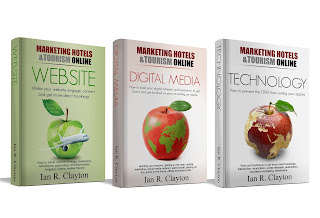
Latest Book Published in 2016 - Marketing Hotels and tourism Online #WEBSITE
Connecting You With Your Intimate Bot (semantic web3.0)
The Gap In Google's Defenses (virtical search)
Travel Web Sites Get Personal
Its clear that Global Distribution Systems, Social Networking, local knowledge, vertical search are a threat to the traditional search options.
Meta search travel sites like Kayak, offer better search for travel. Social networks and consumer sites like Tripadvisor, are improving the travel experience by offering relevant unbiased advise. Much favored over paid search results.
Social networking sites like TripAdvisor (acquired by Expedia), IgoUGo (acquired by Travelocity) are taking searches away from traditional search engines.
Kayak now receives more than 6 million unique visitors a month. Expedia has caught Googles attention but for now seems not to be a takeover target!. They are moving instead to create more social media and community content. Already, about 50% of travelers use some sort of online social media site to research their plans, says Rob Torres, Google’s managing director for Travel
The erosion of search in favour of these sites is with good reason. The travel technology platform has developed far beyond the capabilities of generic search.
Travelers need to know details on costs and features that are specific to their own unique requirements.
Travel Search engines like Kayak, sidestep (acquired by Kayak) do this. Underlying is a travel platform, including bookings and quotation systems like; http://arcres.com, and integrated solutions like http://BookingsFranchise.com
Traditional search engines, just don’t deliver these precise results. Try looking for a hotel near Bridgetown in Barbados in the price range of $250 to $500. Google will give you a lot of results, mostly links to booking sites. You need to go to a booking or quotation site like http://BookingsBarbados.com for this. Try searching for Barbados 5 star hotels, chances are that Sandy Lane voted one of the Top ten Hotels in the world will not be in the top lists. As the search engines move further down the road to paid clicks, search results become even more eroded, less relevant and still imprecise.
In addition to these trends, their is a growing list of specialty local sites like AXSES' own BookingsStlucia.com, Barbados Bookings and reservations center and Realholidays.com trip planning. These sites put users in contact with Hotels directly. More and more travelers want to contact their host. They feel they have better communications with a hotel as apposed to a meta site dealing with thousands of properties and thousands more travelers. The smaller regional sites also provide better on the location information, giving local knowledge and advise. Sites like http://realholidays.com, help travelers put together their own, made to measure itinerary, with options that may not be found anywhere else. Like star gazing with Leo, bring your own wine, he supplies the telescope and the story of the stars. You will not find that on Expedia or Kayak
"Seeking information and looking for perspective--like-minded experience and judgments--are currently trumping the straightforward hunt for the best price", says Douglas Quinby, senior director of research at PhoCusWright.
What we need is more consolidation through advanced information engineering. The future web will be about bringing services and technology together in a powerful information delivery system.
MORE ABOUT THE FUTURE OF THE INTERNET NEXT!!!
Links
Latest Book Published in 2016 - Marketing Hotels and tourism Online #WEBSITE
Connecting You With Your Intimate Bot (semantic web3.0)
The Gap In Google's Defenses (virtical search)
Travel Web Sites Get Personal
Tuesday, 27 November 2007
Need for Bookings Franchise
I have just returned from World Travel Market, London, 2007, the biggest destination travel show in the world. I spend some time chatting to destination about the Bookings systems they are using. In the Caribbean many are using WWTE a white label product of Expedia. It is not working well.
The problem is that Tour operator (TO) systems just don't work for Destinations. The Destination authority is responsible for marketing its member tourism operators. This means it must use the market channels and not conflict with it. Its prime responsibility is to help its clients get access to markets, be represented in global distribution and to encourage Direct Sales.
The TO booking systems operate on a distribution and Merchant model. They get net rates on hotels, mark them up and resell them, collecting the funds in advance and paying operators. Their systems require clients to abide by their rules and terms including setting aside rooms and units for their exclusive use (allocation). If a small hotel can't do this they often don’t get listed. They don't get listed if they are too small and can’t offer acceptable NET rates. TO systems do not promote direct sales and they don’t build hotel brands. Many are opaque, obscuring the hotel brand in favour of Best Price. The Destination Marketing company has an entirely different objective.
A sensible solution for Destinations is http://BookingsFranchise.com.
PRESS Release:
Powerful New Travel Platform Now Available for Destination Marketers
http://BookingsFranchise.com: Affordable Branded Channels for Direct Marketing. A first of its kind product for tourism destinations and travel portals.
BookingsFranchise.com platform delivers top e-commerce services. It is a powerful full featured solution, integrated with Global Distribution (GDS) and Internet marketing driving Direct Business and Distribution sales. BookingsFranchise is easy for destinations and tourism operators to setup and manage and easy for travelers to use; to get quotes, find, compare and book properties.
It is a proven platform of travel technology, developed and implemented by AXSES for Barbados.org, http://BookingsBarbados.com, http://BookingsStlucia.com and http://IntimateHotelsBarbados.com to name a few.
Ian Clayton CEO of AXSES, says “BookingsFranchise.com lets you do business your way, with your own terms and your rules. Unlike Tour Operator centered system, there are no commissions and no net rates. There is no limit to size of properties and all properties have complete flexibility with terms, inventory models and payment options. Ultimately, it delivers a way to take control of the entire supply chain with supplier centered tools”.
Advance your travel marketing; global exposure, more bookings, more control.
email AXSES BookingsFranchise
For More Information please see http://BookingsFranchise.com
Contact: email AXSES
Ian Clayton, iclayton@axses.com
AXSES
Knowledge engineering
Tel: 246 429 2653
Do Business your way with multiple client terms, rate plans and rules.
Axses Travel Platform
delivers a fully interactive personalised solution
+ leading technology
http://arcRes.com |
http://arcRes-crs.com |
http://arcRes-pms.com |
http://Portal-keeper.com |
http://DestinationSuites.com |
http://TravelAgentsRes.com |
http://RealHolidays.com
AXSES Solutions cover all aspects of Travel Marketing and tourism Management.
Wednesday, 4 July 2007
GDS Next Generation
GDS NEXT GENERATION SEAMLESS
The GDS' are the distribution backbone for travel agents, in-house corporate travel departments, and many of the Internet distribution systems like Expedia. They deliver rates and availability information for travel covering air, hotel and car rentals. The information is delivered to the travel agent, so that it appears on their desktop computer using special software to search, display rates and book.
The GDS' Hotel information was originally all input by hand and this is still done manually in many cases. Pegasus employed a house full of workers to do this work, much of this is now out sourced to India. The process is very tedious and time prone to error. Once the information is loaded software system maintain the rate and inventory changes in all GDS. The Pegasus Switch coordinates hotel information bewteen gds sytsems. Data from hotel chains, Internet sites and GDS agents all at some piont use this switch.
To avoid delays and errors hotels and their technology providers opted to integrate the GDS information with their own reservations and property management solutions. This was called seamless integration. 2 way seamless refers to the systems that can manage GDS rates from the hotel CRS or PMS. One way integration simply means the hotel system can view the GDS sales but not manage the data.
Seamless Integration is not the same as NEXT GENERATION.
Next Generation capability was built by the GDS to allow compatible systems to input the data directly into the GDS´s. There are several such sytems in place. (list of services). This means that a hotel might use an online form to input their rates and data and this goes directly into the GDS. It substantially reduces the time to get to market and eliminates some errors when re-keying data. GDS sold this option to vendors who it turn incorporated it into their hotel solutions. Some setup shop as GDS agents to offer this service.
NEXT GENERATION ROBOTICS
The technology to update a mainframe is not trivial. It involves robotics that interface online internet system with GDS mainframe computers. Mainframes are not Internet savvy computers and cannot be accessed directly to change and add data. The data is sent via packets relayed on telecommunications network. The packet relay is interpreted by the Mainframe. As these mainframes are all different systems, protocols and standards were created. Mainframes also have very specific rules on what characters are accepted. Charters and in some cases words act as tigers to set off process in a mainframe, so the information sent to a mainframe must be accurate and comply with their rules. Even years after implementation the GDS-load process was finding errors in data integrity. A simple quotation mark can trigger a failure with disastrous results.
The Pegasus switch (originally called thisco, now called Utraswitch) is not a next generation technology. That is why Pegasus bought a similar system developed by Trust that was. Pegasus plans to upgrade all system by 2008 with conversions starting with hotel factory (their Central reservation system) in November 2007. Pegasus PR
SUMMARY
Next Generation provides GDS users with real-time rates and availability that is 100% identical to the information used by a hotel company's own reservations staff. The information is more quickly available and more accurate resulting in increased confidence and usability by agents. With NEXT generation Seamless, agents are more inclined to sell more using the GDS rather than book via telephone to assure their clients the lowest rates. Galileo Inside Shopper, Worldspan Integrated Hotel Source, Sabre Direct Connect Shop, the respective GDS' Next Generation Seamless products, were implemented by 2004.
GDS Chain Codes
© Ian Clayton, AXSES SCI 2007.
see arcRes solutions for tourism, AXSES web Solution
GDS History
GDS, CRS and channel management
The GDS have long been the primary source of travel agents bookings in the world. Today they do much more and supply content rates and hotel inventory to thousands of On-line Travel website.
The GDS systems are a huge network of thousands of computers set up originally by companies like Sabre, WorldSapn. Amedeus, Galileo and Pegasus. They provided Computer Based Reservations (CRS) services to all travel agents long before the Internet. These system are still in place and are used by more that 480,000 agents worldwide.
When you visit a Travel Agent you will see them at the CRS to find and book flights and resorts.
It has traditionally been an expensive distribution system requiring setup fees in the thousands of dollars as well as booking fees, transaction fees and agents commissions. As a result many smaller hotels are not represented in the GDS and GDS have not been too interested in this sector as they problem of coordinating inventory has been too great (a small hotel just does not have a sufficient supply of rooms to justify the effort of cost them up).
With the advent of new technology this has changed. Now there are GDS agent companies who specialise in supplying content to the GDS computers. The Internet also makes it easier to get the information and distribute it. This has made GDS widely available to hotels of all size. An inovator in opening up the Market was Tom Egan of reserv, who single handedly changed the face of distribution by offering an easy to use system with no setup fees and no minimum charges. His system worked on next Generation technology meaning that the entire process of setting up a hotel was done on-line, no manual entry. Alas Tom sold out and his ideas hot the dust.
2 way integration
New e-commerce systems (such as arcRes http://Bookings-Expert.com, http://axses-innkeeper.com and http://arcRes-CRS.com) are integrated with the GDS system to make it even easier and more affordable for hotels to market throught GDS. The two way integration makes it easier to setup and to manage rates and inventory in multiple channels. It essentially means that a hotel can use their own web booking engine or front desk software (that is GDS integrated) to see and process GDS reservation and to update allocation and rates. This is a great advantage as it means less to learn and to manage.
see also GDS Next Generation Seamless
A major problem facing the industry now is the proliferation of vendors. Whereas before we had a few key Tour Operators, now there are numerous Internet companies, like Expedia, Travelocity, Hotel.com, Priceline.com and many others that have vastly more exposure that the traditional Tour Operators. Getting products onto these system and maintaining rates, content and inventory requires full time management and is not feasible for many small resorts.
Fortunatly new hotel tools like arcRes Website Bookings Engine (Bookings-Expert) now provide a single system to maintain. It also makes rates management easier by allow suppliers to specify any rate in any channel as a % of another rates or a markup on costs. Other companies like AXSES are working on building tools that will change the face of distribution giving suppliers (hotels and tourism operators) control over the supply chain. The new model emerging is supplier centered, supply chain management.
In the new business model the hotel and tourism operator tools (field tools) are fully integrated at the operator level and with downstream distribution. For example the web bookings engine is integrated with property management, housekeeping and inventory. All this is integrated with the GDS system and destination portals like http://BookingsStlucia.com as well as with the GDS, and retail sites like http://travelocity.com feeding from the central database updated by arcRes.
Very Long Ago.
The history of the development of GDS is a great story. One of the best accounts I have seen is available at http://www.innadvance.com/index5.htm
In breif, it follows the development of a reservation systems spearheaded by American Airlines. The startup of ThisCo the switch that connected hotels to the airlines and travel agents systems and all the steps leading up to that.
© Ian Clayton, AXSES SCI 2007.
see arcRes solutions for tourism, AXSES web Solution
Subscribe to:
Posts (Atom)